ELIOT, T.S.
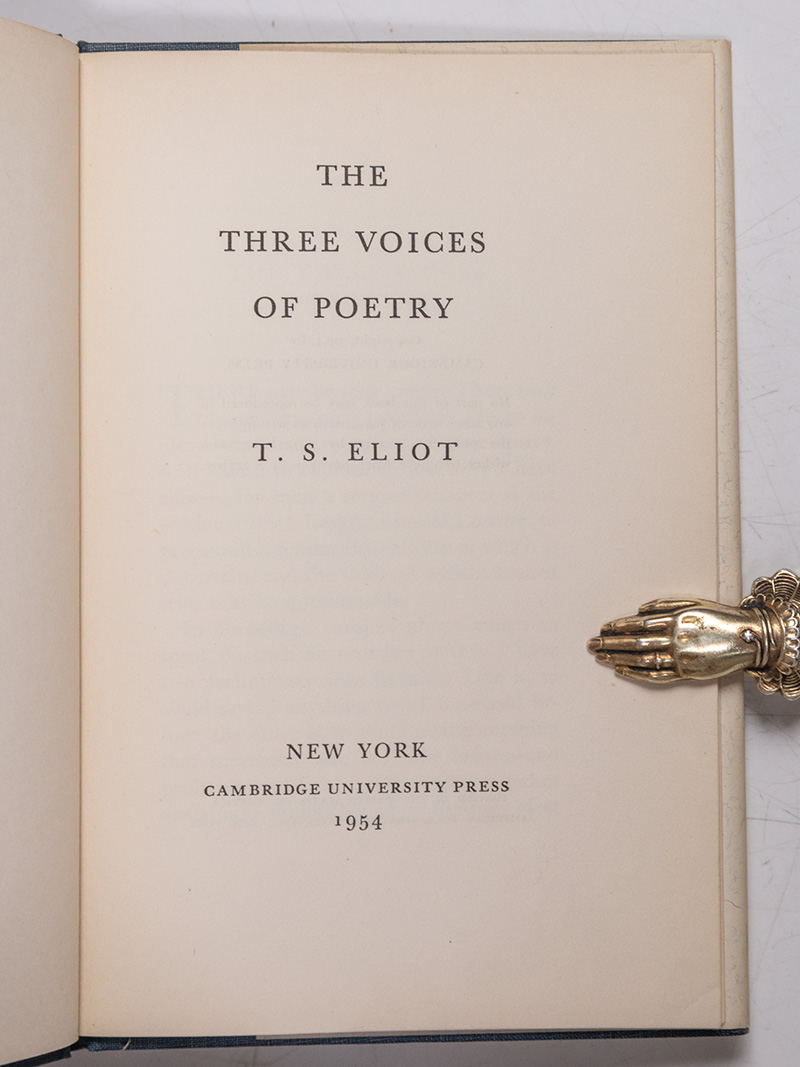
The Three Voices of Poetry.
New York: Cambridge University Press, 1954.
$3,500.00
In Stock
Item Number: RRB-151598
+$500
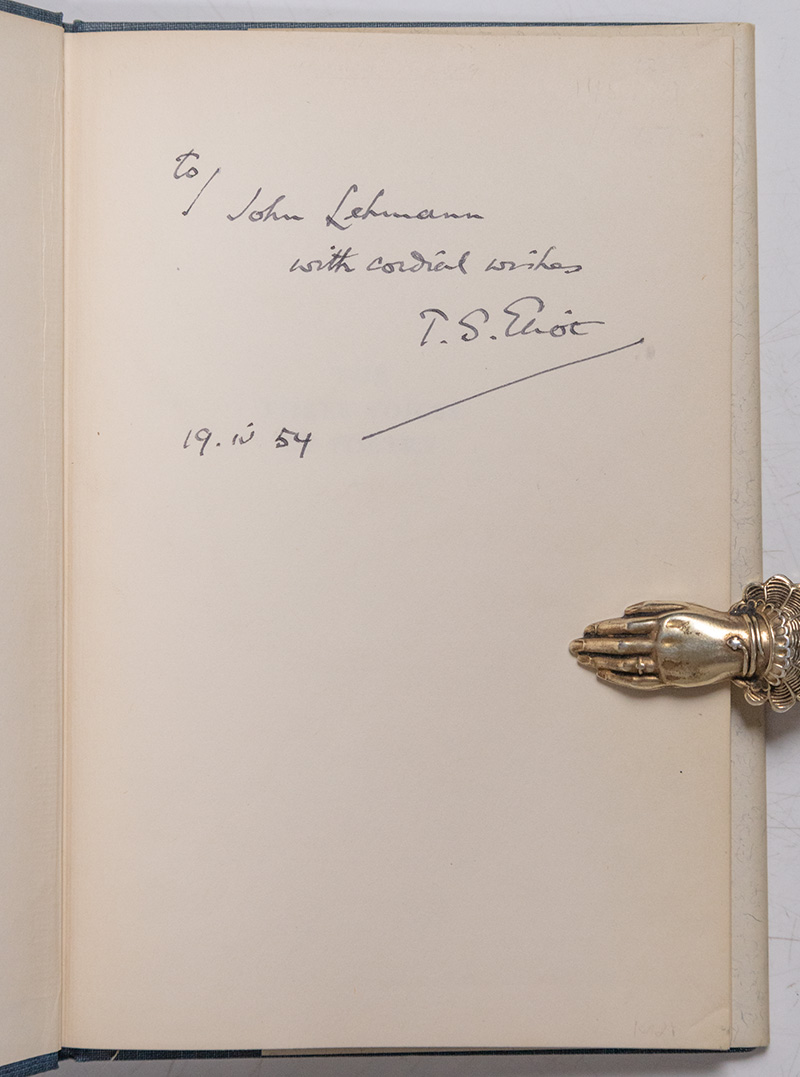
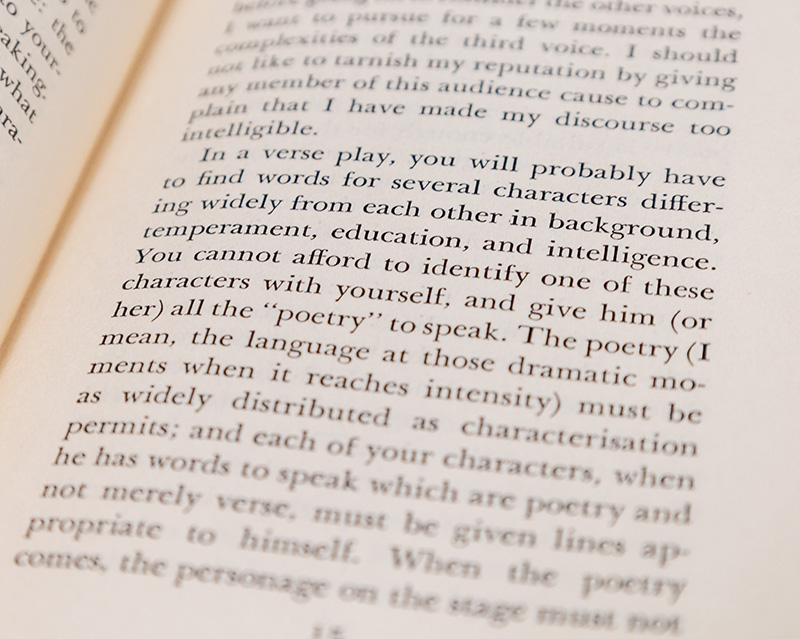
"The third is the voice of the poet when he attempts to create a dramatic character speaking in verse": First Edition of T.S. Eliot's The Three Voices of Poetry; Inscribed by Him to Fellow Poet and Publisher John Lehmann
First edition of Eliot's essay on the modes of poetic composition delivered as the annual lecture of England's National Book League. Octavo, original cloth. Association copy, inscribed by the author on the front free endpaper, "To John Lehmann with cordial wishes T.S. Eliot 19.10.54." The recipient, John Lehmann was an English publisher, poet and man of letters, who founded the periodicals New Writing and The London Magazine, and the publishing house of John Lehmann Limited. He joined Leonard and Virginia Woolf as managing director of Hogarth Press between 1938 and 1946. He then established his own publishing company, John Lehmann Limited, with his novelist sister Rosamond Lehmann (who had a nine-year affair with one of Lehmann's contributing poets, Cecil Day-Lewis). They published new works by authors such as Jean-Paul Sartre and Nikos Kazantzakis, and discovered talents like Thom Gunn and Laurie Lee. Lehmann edited two anthologies of new writing entitled Orpheus: A Symposium of the Arts (1948–49). He also published the first two books by the cookery writer Elizabeth David, A Book of Mediterranean Food and French Country Cooking. He published two of Denton Welch's posthumous works: A Voice Through a Cloud (for which he supplied the title) (1950) and A Last Sheaf (1951). This publishing house published several book series, including the Chiltern Library, the Holiday Library, the Modern European Library, and the Library of Art and Travel. It operated from 1946–1953. Fine in a near fine dust jacket.
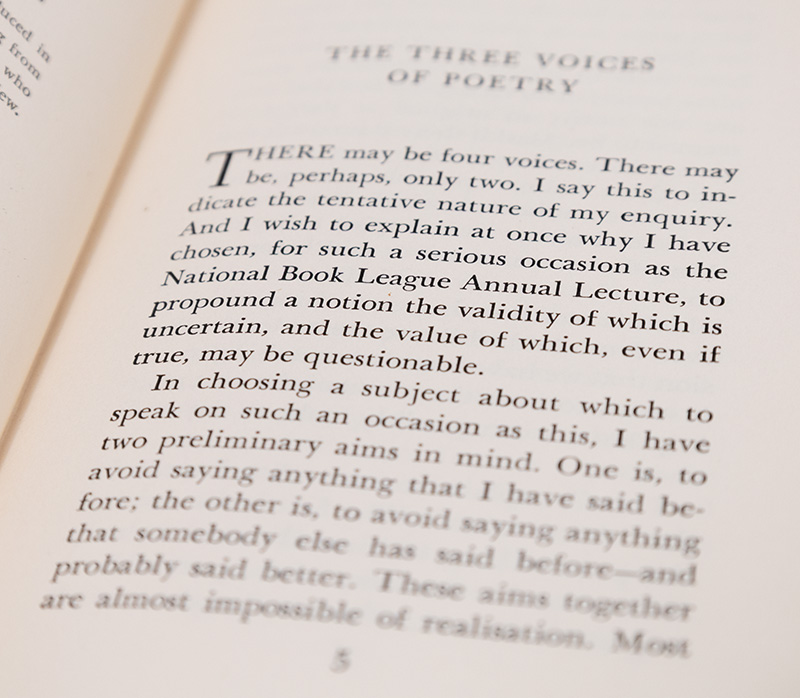
Of the three voices of poetry, here defined by T.S. Eliot, the first voice is that of the poet talking to himself, directly expressing himself. The second voice is that of the poet addressing an audience, offering a message, or the poem written to amuse. The third voice is that of the poet when he is creating a character, as in a poetic drama. The essay was delivered in the form of a lecture before the National Book League of England and offers insight into the mind and heart of the great poet at the height of his creative process.
The Three Voices of Poetry.
$3,500.00
In Stock
Other Books by this Author