ARISTOTLE.
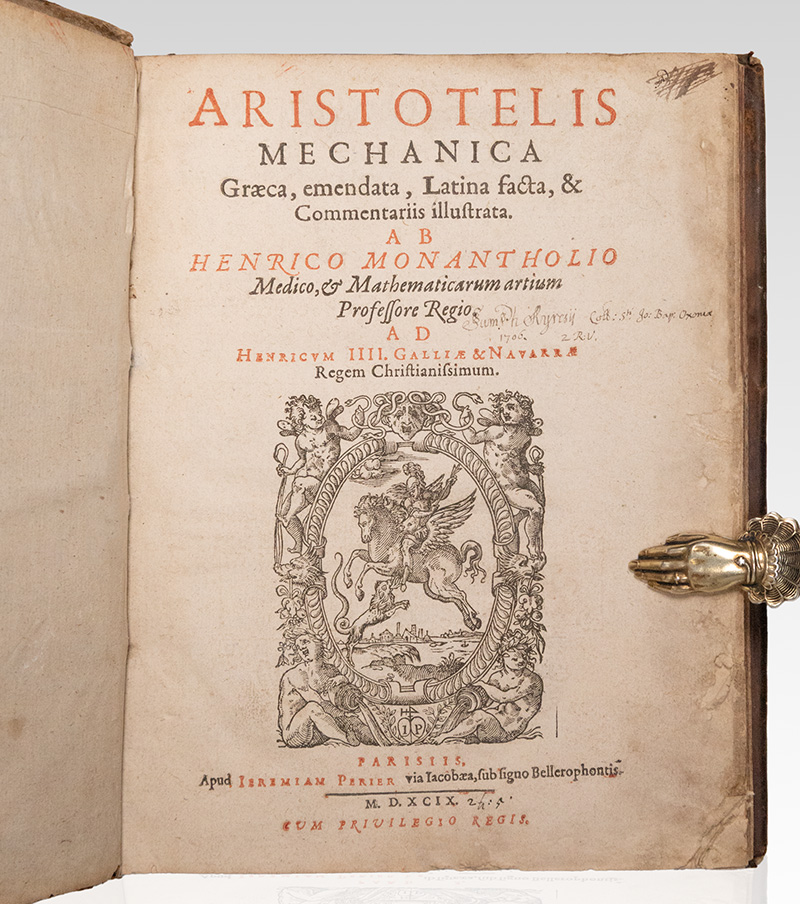
Mechanica Graeca, emendata, Latina facta, & commentariis illustrata ab Henrico Monantholio.
Paris: Jeremiah Perier, 1599.
$12,800.00
In Stock
Item Number: RRB-152271
+$500
First Edition of Henri de Monantheuil’s 1599 Edition of the Mechanica, the Earliest Known Treatise on Mechanics, Attributed to Aristotle
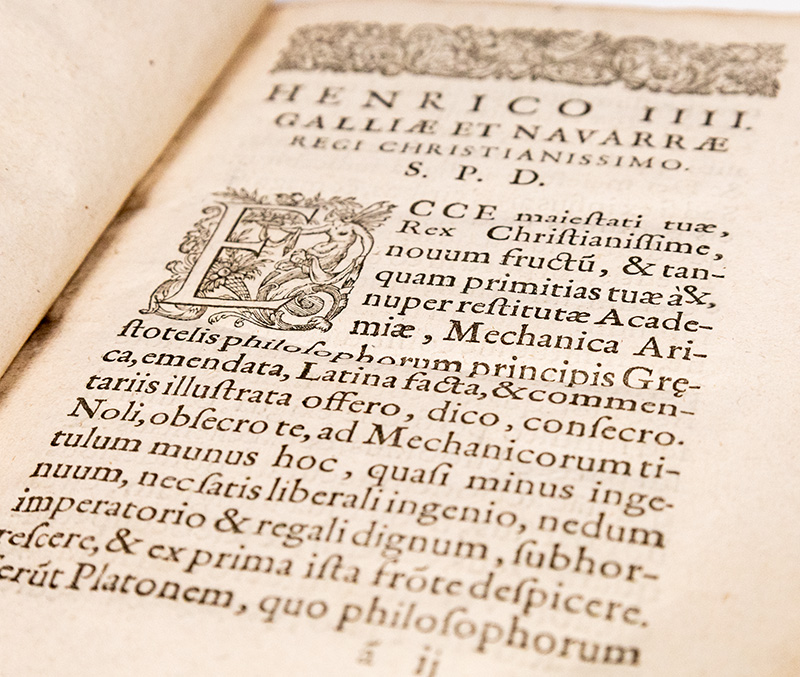
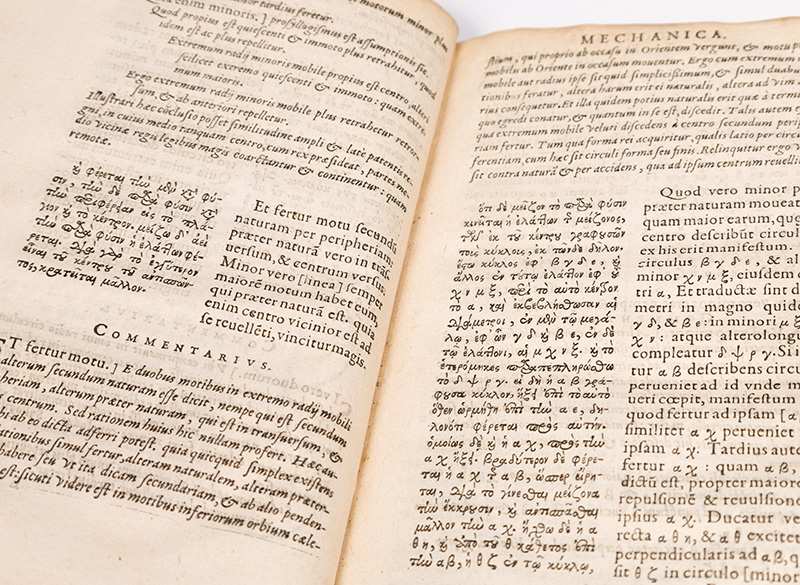
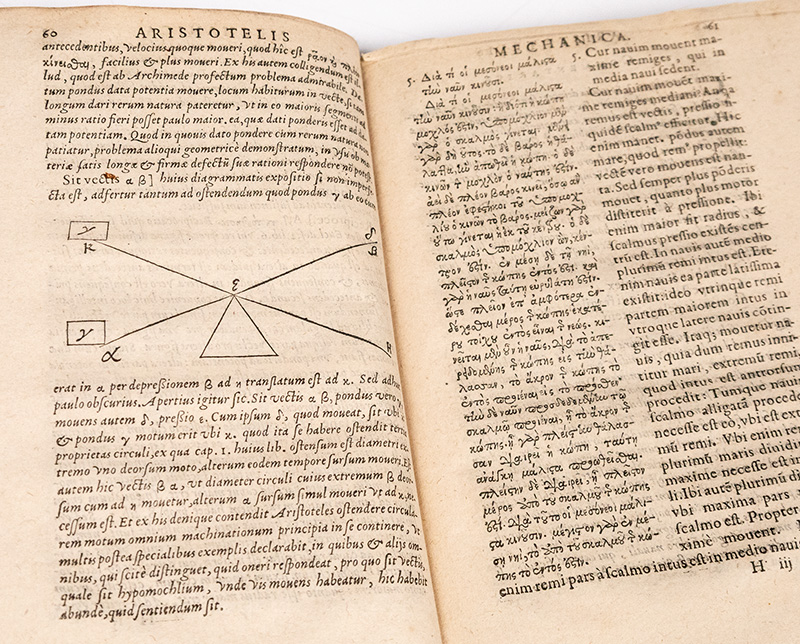
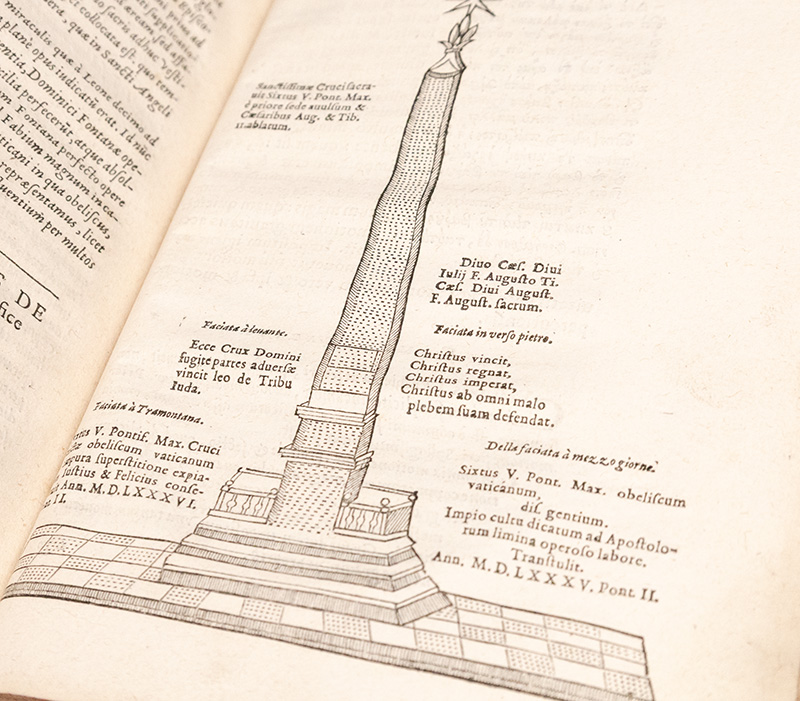
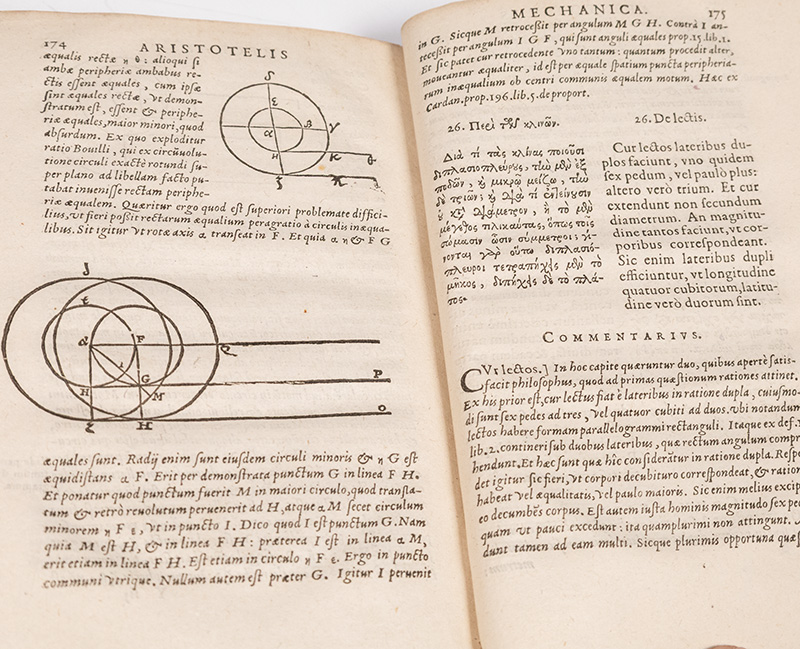
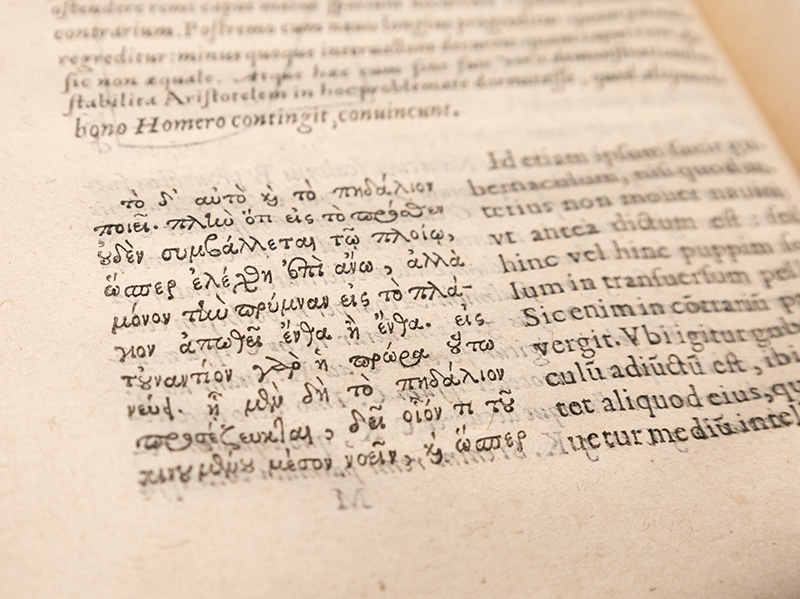
First edition of this landmark work, Henri de Monantheuil’s celebrated Greek and Latin edition of the Mechanica, the oldest surviving treatise on the science of mechanics, long ascribed to Aristotle. Octavo, bound in full contemporary calf with four raised bands to the spine. Text in Greek and Latin, the title printed in red and black, illustrated with numerous in-text woodcuts and a full-page woodcut depicting the moving of the Vatican obelisk. The Mechanica, or Mechanical Problems, is the earliest known work on mechanics, traditionally attributed to Aristotle though now thought to derive from his school, perhaps from Straton of Lampsacus or Archytas of Tarentum; it set out the principle of the lever and the parallelogram of velocities and remained profoundly influential on the development of physics through the Renaissance. Henri de Monantheuil (1536-1606), French mathematician and physician to Henri IV, here re-established the Greek text, supplied a fresh Latin translation, and added an extensive commentary. In good condition, the contemporary calf rubbed with minor loss at the spine tail and marginal losses to a few preliminary leaves, with early penciled notations to the front and rear pastedowns and at the end of the index. Adams A-1846; USTC 146709; Honeyman I:145. A landmark in the history of science, the first appearance of this important edition of antiquity’s foundational text on mechanics.
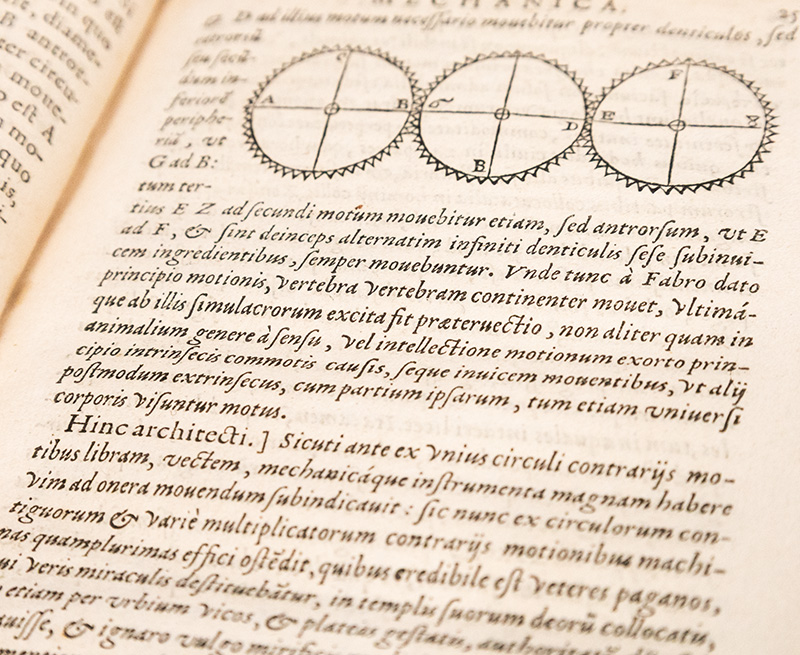
The Mechanica, also known as the Mechanical Problems, is the earliest surviving treatise on the science of mechanics, traditionally attributed to Aristotle but more likely the work of his Peripatetic school. Posing a series of problems drawn from everyday physics, it introduced the principle of the lever and the notion that circular motion combines opposing tendencies, and it shaped mechanical thought from antiquity through Galileo. This 1599 Paris edition, prepared by the French mathematician Henri de Monantheuil, presents the Greek text alongside a Latin translation and a substantial commentary, and is illustrated with woodcuts including a full-page depiction of the moving of the Vatican obelisk.
Mechanica Graeca, emendata, Latina facta, & commentariis illustrata ab Henrico Monantholio.
$12,800.00
In Stock
Other Books by this Author

![Aristotelis De Historia Animalium Libri. IX. [Bound with] De Partibus Animalium, & Earu Causis, Libri IIII; De Generatione Animalium Libri V; Hoc Volumine Continentur.](https://www.raptisrarebooks.com/wp-content/uploads/2022/02/rrb-133014.jpg)
![Analytica Posteriora [bound with] Quaestiones super XII libros Metaphysicae Aristotelis.](https://www.raptisrarebooks.com/wp-content/uploads/2019/11/analytica-posteriora-bound-with-quaestiones-super-xii-libros-metaphysicae-aristotelis.jpg)