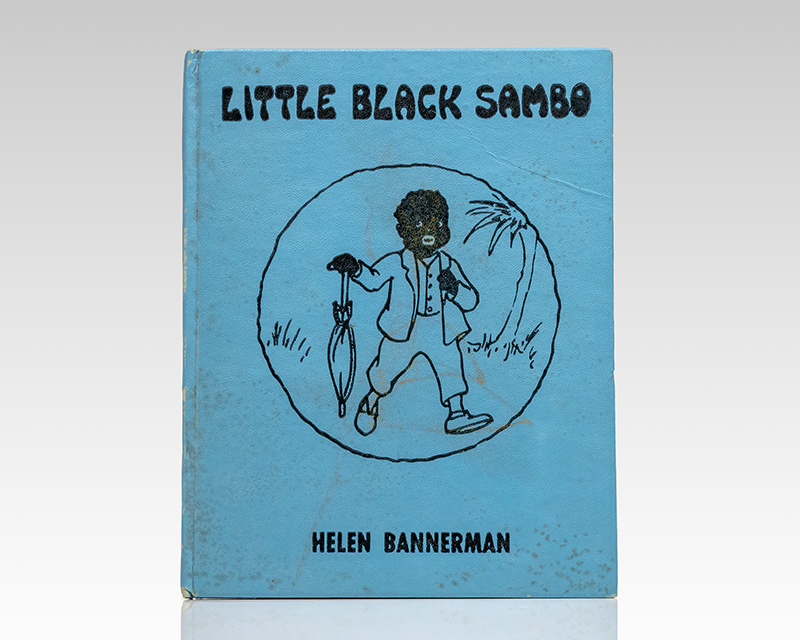
The long-running Platt & Munk edition of Helen Bannerman's Little Black Sambo, Illustrated by Eulalie
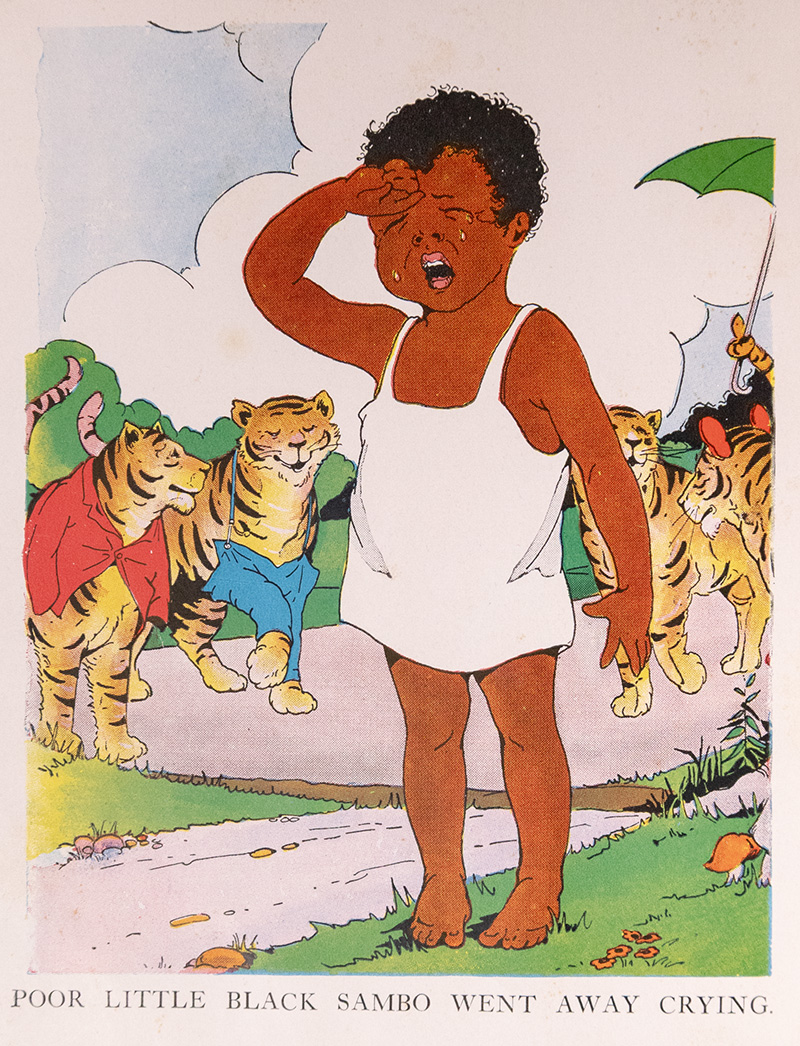
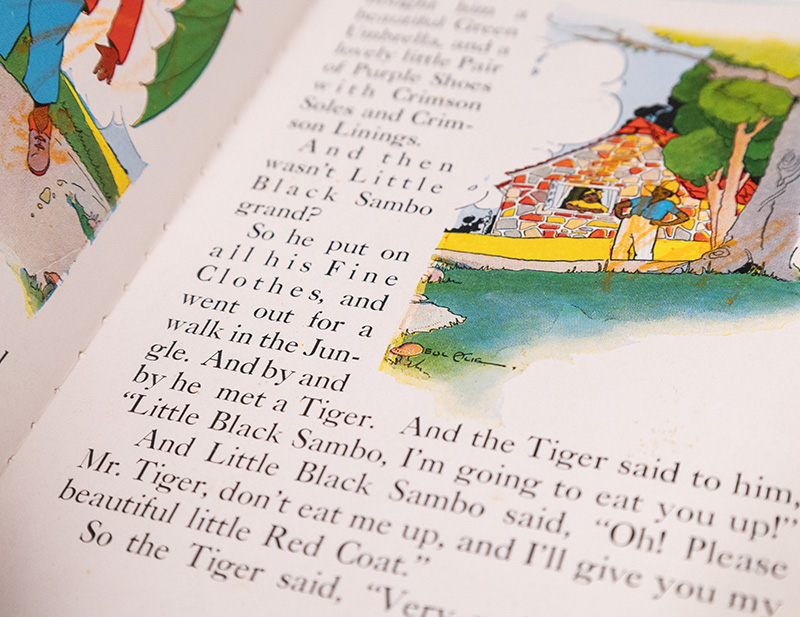
The long-running Platt & Munk edition of Helen Bannerman's Little Black Sambo, illustrated by Eulalie and first issued in 1928. One of the most popular and, in later years, most controversial of all children's picture books. Octavo, original publisher's pictorial blue cloth, pictorial endpapers, illustrated throughout by Eulalie. Published by The Platt & Munk Co., New York, with copyright dates of 1925, 1928 and 1955. Eulalie's illustrations are significant in the book's publishing history as among the earliest to depict the characters as distinctly African American rather than in the caricatured manner of earlier printings. Bannerman's tale, first published in London in 1899, was drawn from her years in southern India, and it went on to become one of the most widely reprinted and, in the later twentieth century, most debated of all children's picture books. In very good condition.
Little Black Sambo was written and illustrated by Helen Bannerman (1862-1946), a Scottish author who devised the story in 1898 to amuse her own children while living in India, and first published it in London in 1899. It tells of a resourceful little boy who, confronted by a succession of tigers threatening to eat him, gives up his fine new clothes to them one by one, only to recover everything when the vain beasts chase one another around a tree until they melt into butter, which his family uses to make pancakes. Enormously popular through the first half of the twentieth century and issued in countless editions on both sides of the Atlantic, the book later became the subject of sustained criticism in the United States, where the name “Sambo” had taken on strongly pejorative connotations and the illustrations were widely regarded as demeaning racial caricature, leading many libraries, schools, and publishers to withdraw, revise, or retitle it. It remains a landmark in the history of the illustrated children’s book and a much-studied artifact of changing attitudes toward race and representation.